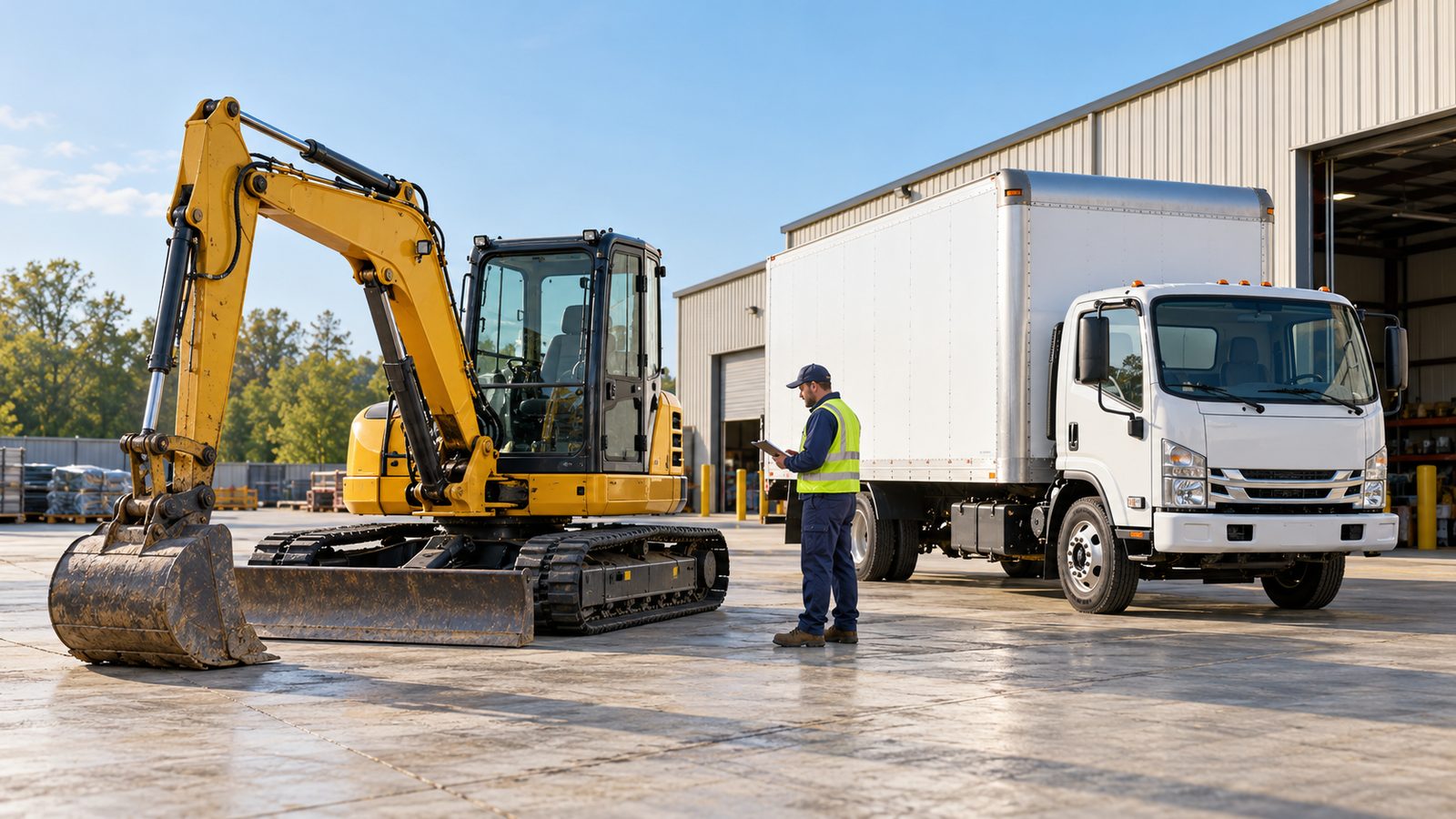
Buying equipment or vehicles for your business can be a major investment. But if you purchased qualifying business property during 2026—or you’re considering doing so before the end of the year—you may be able to reduce the effective cost of that investment through the Section 179 tax deduction.
Section 179 rewards a more proactive approach to tax planning, and we’re never not going to remind you of this opportunity. Qualifying limits have also increased for 2026, creating an even larger potential deduction for qualifying businesses.
Team Financial Group is here to help businesses like yours finance equipment and commercial vehicles throughout the year. While your tax professional should determine exactly how Section 179 applies to your situation, understanding the basics can help you make better-informed equipment purchasing and financing decisions.
What Is the Section 179 Tax Deduction?
Normally, when a business purchases a long-term asset, it may take depreciation deductions over the asset’s applicable recovery period instead of deducting the entire eligible cost immediately.
But under Section 179 of the Internal Revenue Code, businesses can elect to expense some or all the eligible cost of certain property during the tax year in which it is placed in service, subject to applicable limits and other requirements.
Consider a simplified example. If a company purchases and places $150,000 of qualifying equipment into service and is eligible to claim the entire amount under Section 179, it may be able to deduct that $150,000 rather than spreading depreciation deductions across multiple future years.
A deduction is not the same thing as a dollar-for-dollar tax credit, so a $150,000 Section 179 deduction does not mean receiving $150,000 back. Instead, the deduction reduces taxable income. The actual tax impact depends on factors specific to the business.
Working with your accountant or tax advisor can help you best determine your potential savings.
What Are the Section 179 Limits for 2026?
Section 179 limits are adjusted periodically. For tax years beginning in 2026:
- The maximum Section 179 deduction is $2,560,000.
- The deduction begins to phase out when the total cost of Section 179 property placed in service during the year exceeds $4,090,000.
Once qualifying purchases exceed the applicable threshold, the maximum available Section 179 deduction begins decreasing.
However, relatively high limits mean Section 179 isn’t only relevant to companies making one or two modest purchases. Businesses undertaking substantial fleet, machinery, technology, or facility investments may also have reason to discuss Section 179 planning with their tax professionals.
What Changed for Section 179 in 2026?
Recent federal tax legislation significantly increased Section 179 limits beginning in 2025, and those amounts are subject to inflation adjustments in subsequent years.
For 2025, the maximum deduction was $2.5 million and the phaseout began at $4 million. For 2026, inflation adjustments raised those numbers to $2.56 million and $4.09 million, respectively.
The special limitation for certain SUVs also rose from $31,300 in 2025 to $32,000 in 2026.
Most typical equipment buyers, however, will be happy to know that the general rules governing what qualifies have not suddenly been replaced with an entirely different system for 2026. Businesses should still focus on questions such as:
- Is the property eligible under Section 179?
- Was it acquired for use in an active trade or business?
- Is it used predominantly for qualifying business purposes where applicable?
- Was it purchased in a qualifying transaction?
- Was it placed in service during the tax year?
Recent legislation also restored permanent 100% bonus depreciation for certain qualified property acquired and placed in service after January 19, 2025. Bonus depreciation is separate from Section 179, although the two can sometimes interact as part of a broader depreciation strategy.
Your tax advisor can help determine whether Section 179, bonus depreciation, regular depreciation, or a combination provides the best result for your business.
What Equipment May Qualify for Section 179?
Section 179 covers a wide range of business property, which is one reason it’s worth reviewing the purchases your company has already made this year.
Potentially qualifying property can include certain:
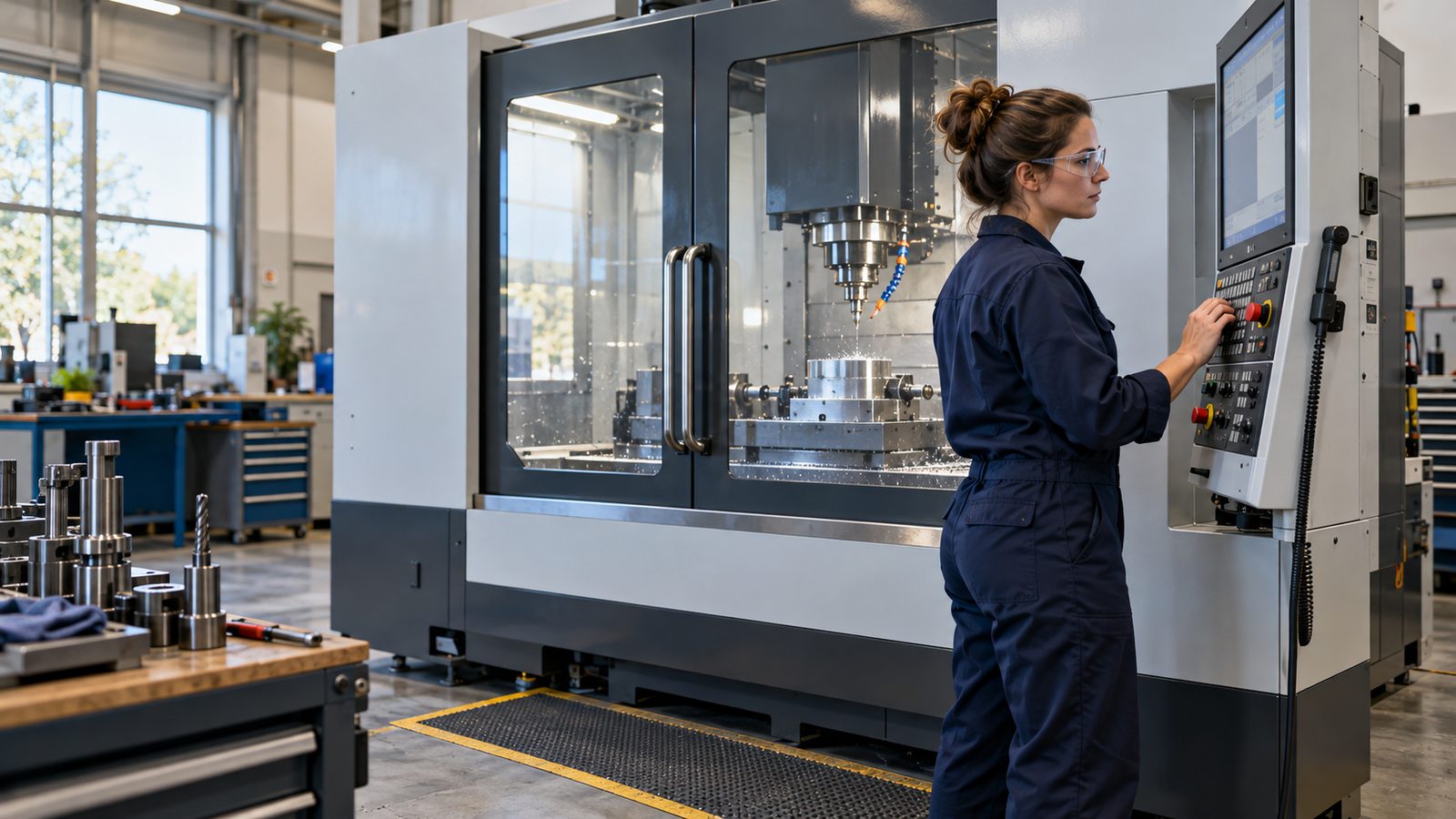
- Manufacturing machinery
- Construction equipment
- Agricultural equipment
- Commercial vehicles
- Business technology and computer equipment
- Office furniture and equipment
- Off-the-shelf computer software
- Tools and specialized industry equipment
New and qualifying used property may potentially be eligible. Used equipment doesn’t necessarily have to be “new” in the ordinary sense. However, requirements regarding how the property was acquired, including rules involving purchases from related parties, can affect eligibility.
Certain improvements to nonresidential real property can also potentially qualify. Examples include qualified improvement of property and certain roofs, HVAC property, fire protection and alarm systems, and security systems.
There are numerous exceptions and special rules. Don’t automatically assume that an asset qualifies simply because your company purchased it for some business-related purpose.
What About Business Vehicles?
Section 179 rules can become more complicated when it comes to vehicles.
Certain commercial vehicles may qualify for substantial Section 179 deductions, particularly vehicles designed primarily for business purposes. But passenger automobiles and certain SUVs are subject to additional limitations.
For 2026, certain SUVs weighing more than 6,000 pounds but not more than 14,000 pounds gross vehicle weight may be subject to the special $32,000 Section 179 limit.
However, that SUV limitation doesn’t apply to every heavy business vehicle. Certain vehicles designed for carrying larger numbers of passengers, some trucks with sufficiently large cargo areas, and particular cargo-oriented vehicles may fall under different rules.
Business use matters as well. Section 179 generally requires property subject to the business-use test to be used more than 50% for qualified business purposes. If an asset has both personal and business use, the deductible amount can also be affected by the percentage of qualified business use.
If your company purchased pickups, service vans, delivery vehicles, fleet vehicles, or other commercial transportation assets this year, consider having your tax professional review them individually.
RELATED: How to Save on Commercial Vehicle Financing
Don’t Forget Equipment You’ve Already Purchased in 2026
Section 179 planning isn’t only for equipment you haven’t purchased yet. This time of year, is also a good opportunity to review everything your business has acquired since January.
Look through your 2026 purchases and ask whether you acquired:
- Replacement machinery
- Additional vehicles
- Computers or technology
- New production equipment
- Warehouse equipment
- Construction machinery
- Specialized tools
- Qualifying building improvements
It’s a good idea for the future to keep documentation on what you purchased, when you purchased it, its cost, how it is used, and when it was placed in service. Good records will make conversations with your accountant easier when preparing your tax return.
“Purchased” Isn’t Enough: The Placed-in-Service Rule Matters
This is one of the most important Section 179 details to remember as 2026 draws to a close.
Generally, qualifying property must be placed in service during the tax year for which you want to claim the deduction.
“Placed in service” essentially means the property is ready and available for its intended use. Simply signing a purchase agreement or paying a deposit before Dec. 31 may not be sufficient if the equipment won’t be ready for use until 2027.
For example, ordering a machine on Dec. 20 that won’t arrive and become operational until January may not produce the same 2026 tax result as equipment delivered, installed, and ready for use before year-end.
You Still Have Time to Consider 2026 Equipment Purchases
There is still time in 2026 to evaluate equipment needs and potentially place additional qualifying purchases into service before year-end.
That doesn’t mean you should buy equipment solely to generate a tax deduction, of course. It should also make operational and financial sense. Start by asking:
- Are we planning to replace this equipment in the next six to twelve months anyway?
- Is outdated equipment causing excessive repairs or downtime?
- Could new equipment increase productivity or revenue?
- Do we need additional vehicles or machinery to support growth?
- Is there equipment in our 2027 budget that would make sense to acquire sooner?
- Can the equipment realistically be delivered and placed into service before the end of 2026?
If the answer points toward making a purchase this year, financing can provide another advantage: your company may not necessarily have to pay the entire equipment cost in cash during 2026 to receive potential Section 179 benefits.
Depending on how financing is structured and the applicable tax rules, financed property can potentially qualify for Section 179 treatment. That may allow a business to preserve working capital while still benefiting from a current-year deduction.
Your accountant and financing provider can help you determine how the structure fits your situation.
RELATED: Lease vs. Loan vs. Cash: Which is Best for Your Equipment Purchase?

Financing Can Help Turn a Tax Opportunity into a Business Investment
Finding an attractive potential deduction doesn’t help much if purchasing the equipment would empty your cash reserves.
That’s where equipment financing can become part of the strategy.
Instead of paying the entire purchase price upfront, financing can allow businesses to spread equipment costs over a predictable schedule while preserving capital for expenses such as payroll, inventory, marketing, and other investments.
At Team Financial Group, we work with businesses to develop financing solutions around their equipment needs, cash flow, and growth plans. Depending on the circumstances, that can include financing for commercial vehicles, machinery, technology, construction equipment, and many other types of business assets.
Our flexible approach can also help companies act when timing matters. If you’re trying to get needed equipment purchased, delivered, and placed into service before the end of 2026, beginning the financing process sooner can give you more time to coordinate with vendors and avoid a last-minute rush.
Contact us today and let’s schedule a time to discuss your financing options. Your CPA or tax advisor can determine which tax benefits apply.
This content is provided for informational purposes only and is not intended as tax, accounting, or legal advice. Section 179 eligibility and tax savings depend on your individual circumstances. Consult a qualified tax professional regarding your business.