
If your business is planning to purchase equipment or commercial vehicles this year, you have a powerful opportunity to reduce your tax burden and improve cash flow thanks to recent updates to the Section 179 tax deduction.
For years, this small-business-friendly incentive has helped companies invest in essential equipment while saving money at tax time. But now, thanks to changes introduced in the recently passed “One, Big, Beautiful Bill,” those savings have gotten even bigger.
At Team Financial Group, we’re here to help you understand what these updates mean for your business, how to take full advantage of them, and why it might make sense to move quickly if you’re planning a purchase this year.
Section 179 is part of the IRS tax code that allows businesses to deduct the full purchase price of qualifying equipment, vehicles, and software in the same year they are put into service.
That’s a big deal.
Normally, the IRS requires you to depreciate large equipment purchases over several years and spread out the tax benefit. But with Section 179, you can deduct the full amount upfront, lowering your taxable income immediately.
In short, the Section 179 deduction:
No tax loopholes. No gimmicks. It’s a legitimate, IRS-sanctioned way to make investing in your business more affordable.
BLOG: How to Save on Commercial Vehicle Financing
In 2025, lawmakers passed the “One, Big, Beautiful Bill,” a sweeping package designed to stimulate small business investment. Updates to Section 179 were one of the key features included.
Here’s what’s new:
Under the new rules, businesses can now deduct up to $2.5 million in qualifying equipment purchases per year. That’s a major boost from the previous limit, giving mid-sized and growing companies more room to invest—and save.
Section 179 used to start phasing out when total equipment purchases reached $2.7 million. That threshold has now increased to $4 million, meaning more businesses will qualify for the full deduction.
In addition to traditional equipment and vehicles, the revised Section 179 now covers a broader range of improvements including:
If you’ve been putting off building improvements due to cost, this expansion gives your company a new incentive to move forward.
One of the best features of Section 179 is that you can combine it with bonus depreciation. If your equipment or property investment exceeds the deduction limit, bonus depreciation lets you deduct 100% of the remaining value in the same year.
This combination means that in many cases, you can write off the entire cost of your purchase even if it’s above $2.5 million.
These changes are especially valuable for businesses that:
Whether you’re buying one vehicle or upgrading your entire facility, these changes are designed to make your investments more affordable in the short term without sacrificing long-term stability.
Here’s a quick example to show how these changes might impact your business.
Let’s say you finance $200,000 worth of equipment this year. Under Section 179, you may be able to deduct the full $200,000 from your taxable income, even though you’re making monthly payments over time.
That could translate to $40,000 or more in tax savings, depending on your tax bracket.
And remember: you don’t need to pay cash up front to claim the deduction. Financed equipment still qualifies as long as it’s placed into service before December 31 of the tax year.
With these generous new limits and the potential for significant savings, now is an ideal time to invest in the equipment your business needs.
But there are two things to keep in mind:
Section 179 applies only to equipment and vehicles that are purchased and placed into service before the end of the calendar year. That means waiting until late December might be too late.
Even in a post-pandemic economy, many industries are still facing long lead times for certain vehicles or machines. If you’re considering a major purchase, start planning now to ensure everything is up and running before year-end.
At Team Financial Group, we specialize in helping businesses finance equipment and vehicles in a way that maximizes their savings and supports growth.
Here’s how we help you take full advantage of Section 179:
We understand that when you’re ready to act, you need answers quickly. Our streamlined application process often leads to same-day approvals. We offer flexible payment structures to match your cash flow.
With $0 down options, you can finance the full cost of equipment, improve your cash position, and still claim the full deduction.
We’ve worked with many businesses to plan their purchases around Section 179 eligibility. We’re happy to collaborate with your CPA or tax advisor to ensure your financing strategy aligns with your tax planning goals.
BLOG: How to Navigate an Equipment Financing Application: A Step-by-Step Guide
Section 179 updates give business owners a unique opportunity to invest in vehicles, machinery, and property improvements while keeping more money in their business.
If you’re thinking about purchasing new equipment this year, Team Financial Group is ready to help you move quickly, finance wisely, and maximize your tax savings.
Contact us today or call 616-735-2393 to speak with a financing expert who understands your business and your goals.
When it comes to equipment financing, there’s no shortage of misconceptions. Unfortunately, those myths can hold businesses back from smart, strategic growth.
Maybe you’ve heard that financing is only for startups, or that the process is slow, expensive, or rigid. Maybe you’re unsure if your credit is good enough, or you’ve assumed that ownership isn’t possible if you finance equipment.
These outdated equipment financing ideas are more than just myths. They can alter your thinking to the point that it stalls your momentum and restricts your ability to scale, even when your business is thriving.
At Team Financial Group, we help business owners achieve their goals every day with fast, flexible, and customized equipment financing options for companies of all sizes.
Let’s take a closer look at some common equipment financing misconceptions and what the truth really is. And if you’d like to speak with one of our experts now, don’t hesitate to contact us.
Traditional banks often rely on rigid credit score thresholds. But independent lenders like Team Financial Group understand that your credit score is only one part of your financial story.
We look at the whole picture: your company’s track record, current operations, and future goals. For businesses with a solid foundation but less-than-perfect credit we can often create a financing solution that makes sense.
In short: Don’t assume you’re disqualified just because your credit score isn’t perfect. Talk to a financing partner who will listen to your story and explore the possibilities with you.
Some business owners assume that paying cash is the cheapest option. But in many cases, financing provides greater value over time. Here’s why:
In fact, a report from the Equipment Leasing & Finance Foundation found that 47% of businesses choose financing to optimize their cash flow, because staying cash-healthy is critical to long-term success.
This one couldn’t be further from the truth. Established businesses regularly use equipment financing as a strategic tool to manage growth, update aging equipment, or expand into new capabilities.
Whether you’ve been in business for five years or 50 years, financing helps you:
We’ve partnered with long-standing companies across industries—from manufacturing and logistics to healthcare and construction—who rely on equipment financing to stay agile and competitive.
Financing isn’t just for getting started, but for staying ahead as well.
BLOG: How to Create an Equipment Budget for Long-term Growth
Another common misunderstanding is that financing always means leasing, and leasing means you never own the asset. That’s simply not true.
We have different types of financing structures available, including:
The point is: Financing doesn’t mean having to give up ownership. You have options. At Team Financial Group, we’ll walk you through your choices and help you select a structure that fits your long-term goals.
BLOG: What Happens When an Equipment Finance Lease Expires?
Time is money, and many business owners worry that financing will delay their ability to act. That may be true with traditional lenders, where the process can take 60 to 90 days.
But with the right financing partner, approvals can happen fast. At Team Financial Group, we’ve approved and funded loans in less than 24 hours.
We keep our application process simple and efficient so you can act quickly whether you’re replacing a downed machine, bidding on a new contract, or ramping up production.
If you’re a vendor or dealer selling commercial equipment, you might think your customers will figure out financing on their own. But here’s the truth: most of them are working within a monthly budget.
When you offer a financing option at the point of sale, you shift the conversation from total cost to monthly affordability. That makes decision-making easier for your buyers and increases the likelihood of closing the sale.
Nearly 80% of U.S. companies use some form of financing to acquire business equipment. Offering that option up front can lead to:
We partner with vendors to offer fast, hassle-free financing options that support their sales goals and improve customer satisfaction.
Every business is different, and a good financing partner will accommodate those differences in the plans they offer. If you’ve been turned off by one-size-fits-all solutions in the past, know that today’s equipment financing is more customizable than ever.
At Team Financial Group, we create plans that include:
We believe that equipment financing should work for you, not the other way around. And because we’re not a traditional bank, we’re not constrained by the same rigid formulas.
As your business scales, you’ll likely face moments when demand outpaces your resources. You’ll need to hire, buy equipment, or fulfill contracts before payments hit your account.
Financing allows you to bridge that gap. It turns a large upfront cost into a manageable monthly investment. That could mean the difference between turning away business or taking it on with confidence.
At Team Financial Group, we help companies grow smarter by building equipment financing strategies that make sense. Whether you’re adding one machine or upgrading your entire fleet, we’ll work with you to:
It’s time to stop letting old myths hold you back.
Ready to talk through your equipment needs? Contact us today or call 616-735-2393 to speak with a real person who’s ready to help.
Let’s make equipment financing work for your business—on your terms.
References
Equipment Leasing & Finance Foundation. (2019). 2019 Equipment Leasing & Finance Industry Horizon Report. Retrieved from https://www.store.leasefoundation.org/cvweb/Portals/ELFA-LEASE/Documents/Products/2019HorizonReport.pdf
Whether you’re a manufacturer expanding your production line, a contractor upgrading your fleet, or a business adding new tech to stay competitive, equipment plays a central role in your operations. It’s also going to be a big player in your budget.
But buying the equipment you need doesn’t have to drain your cash reserves or disrupt your financial strategy. With proper planning and the right financing partner, your equipment budget can actually support stronger growth, better cash flow, and smarter decision-making.
At Team Financial Group, we help business owners and managers develop flexible, forward-thinking equipment financing plans that align with their broader budget. Here’s how you can make it happen.
Equipment purchases should not be treated as one-off events but as part of your business’s long-term trajectory. That means your equipment budget shouldn’t just cover what you need right now, but also support where you’re going next.
A well-planned equipment budget will:
Whether you’re budgeting for forklifts, robotics, trucks, CNC machines, or computers, the approach is the same: plan early, budget realistically, and align your financing strategy to your operational goals.
Start by taking inventory of what you have. Areas to look at include:
If any equipment is nearing the end of its useful life or costing you more in repairs than it’s worth, flag it for replacement in the next budget cycle. Similarly, if a machine is outdated or limiting productivity, it may be time to consider an upgrade.
Taking inventory isn’t just about what’s broken. It’s about identifying what’s holding your business back from peak operations and purpose.
BLOG: What is the Best Way to Finance Heavy Equipment?
Tie your equipment plan to your strategic objectives:
Forecast the types and amounts of equipment you’ll need to support those plans. This can help ensure your budget supports a series of proactive investments instead of having to make on-the-fly purchases.
Once you know what you need, start assigning equipment cost estimates. Consider:
You may also want to consider the total cost of ownership beyond the sticker price. Don’t forget to factor in soft equipment costs like operator training, extended warranties, or software integrations. These can be especially substantial for high-tech or specialized equipment.
Now comes the part that can turn a tight budget into a powerful growth tool: financing.
Rather than budgeting for lump-sum purchases that drain cash reserves, work with a financing partner to build monthly or seasonal payments into your equipment budget. This strategy allows you to:
At this stage, your budget should reflect two numbers for each item:
That second number becomes the equipment line item in your operating budget, making it easier to manage cash flow and plan long-term.
We constantly say that timing can greatly benefit your bottom line.
With a clear budget and financing plan in place, you can time purchases strategically to take advantage of:
Using Section 179 of the IRS tax code, for example, you may be able to deduct the full purchase price of qualifying equipment in the year it’s placed in service, even if you financed it.
Working with a CPA or tax advisor alongside your financing partner ensures you’re maximizing these benefits as part of your overall budget strategy.
Business moves fast. Your equipment budget should be flexible enough just in case you need to call an audible. Leave space in your budget for:
With financing built into your plan, it’s easier to respond to the unexpected without derailing your budget or sacrificing cash flow.
BLOG: Building a Future-Proof Business with Smart Investments
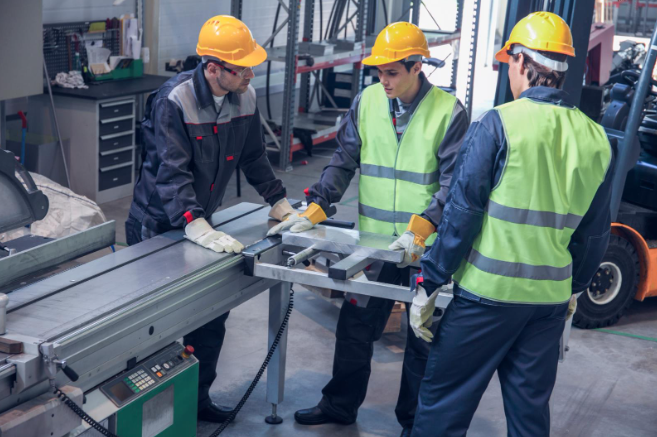
Team Financial Group can help you plan for your company’s equipment future. We know that your equipment budget is part of a larger picture, and we’re here to support you with:
From seasonal payment schedules to deferred-start loans, we’ll structure a financing plan that aligns with your cash flow and business goals.
You don’t have time to wait. Our streamlined application process gets you quick answers so you can act when the time is right.
We take the time to understand your business, your goals, and your growth plans. Our goal isn’t to sell you a product. It’s to help you succeed.
Planning an equipment budget is a strategic investment in your business’s future. And with the right partner by your side, it becomes a tool for sustainable growth.
If you’re ready to explore how equipment financing can fit into your budget, we’re here to help. Call us at (616) 735-2393 or contact us online to schedule a time to talk.
Commercial vehicles such as trucks, cargo vans, and trailers are a critical investment for businesses who must transport goods, conduct field services, or simply get their people from point A to point B. But purchasing or upgrading vehicles can put a strain on cash flow, especially when your capital is needed elsewhere for business growth.
That’s where commercial vehicle financing can help pave the way. With a smart financing strategy and some timely planning, you can reduce upfront costs, preserve working capital, and even unlock valuable savings through deductions like Section 179.
In this article, we’ll walk you through how to strategically approach commercial vehicle finance options and how Team Financial Group can help you save more while investing in the vehicles your business needs.
Commercial vehicle financing allows your business to grow without draining resources. Instead of tying up cash in full purchases, you can spread out costs over time while keeping more capital free for operations, marketing, hiring, or expansion.
Some key benefits include:
Team Financial Group offers flexible financing plans that are customized to your timeline, business model, and budget—so you can drive forward without compromise.
Saving more on commercial vehicle costs often requires planning ahead. Here are a few smart moves to consider:
Planning to purchase multiple vehicles over the next year? Consider bundling them into a single commercial vehicle financing package. This can simplify your budgeting, reduce paperwork, and potentially qualify you for better rates or discounts from vendors.
Don’t settle for rigid monthly payments if your business operates on a more seasonal or project-centered basis. Team Financial Group offers flexible payment structures including quarterly, semi-annual, annual, and step-up or step-down plans that align with your cash flow so you’re never overextended.
Waiting until Q4 to think about your commercial vehicle finance options can lead to rushed decisions or missed tax deadlines. We recommend evaluating your vehicle needs and tax position earlier in the year so you can make smarter, more proactive choices.
Another powerful way to save on commercial vehicle financing is through the Section 179 tax deduction. This provision of the IRS tax code allows businesses to deduct the full purchase price of qualifying equipment placed into service during the tax year. That includes commercial vehicles.
Instead of depreciating the cost of equipment over several years, Section 179 lets you deduct the entire cost (up to a limit) in the year the equipment is put into use.
The deduction limits and spending caps for Section 179 can change year to year, so it’s a good idea to verify current limits with your tax advisor or financing partner.
Not every commercial vehicle qualifies for the full Section 179 deduction, but many do.
Likely to Qualify
Likely Limited or Not Eligible
You should note that every qualifying vehicle must be financed and put into service before December 31 of the tax year you wish to file deductions for.
Many business owners mistakenly think they need to pay cash to take advantage of Section 179. But as long as the vehicle is financed and placed into service before year-end, you can still deduct the full purchase price.
That means you can:
This can be a significant cash flow advantage that lets you grow now and save on taxes later.

At Team Financial Group, we’ve been helping businesses finance commercial vehicles and equipment since 2001.
We’re not a traditional bank. Our approval process is faster, our plans are more flexible, and we take the time to understand your unique business goals.
Our strengths include:
We don’t believe in one-size-fits-all financing. We tailor every loan or lease to your needs whether you’re financing a single delivery van or an entire fleet.
Our streamlined process means faster approvals and quicker access to funding. We know time is money, and we’re here to help you move forward fast.
We’ve helped many businesses structure their vehicle purchases to take full advantage of Section 179. We’ll work with your accountant or tax professional to make sure your financing plan supports your tax-saving strategy.
BLOG: How to Navigate an Equipment Financing Application
Investing in commercial vehicles doesn’t have to put pressure on your cash flow or your bottom line. With smart planning and the right partner, you can finance the vehicles your business needs while maximizing tax savings and preserving flexibility.
Call us at (616) 735-2393 or fill out our contact form to talk with a Team Financial Group expert about your commercial vehicle financing options.
For many businesses, especially those in industries like construction, manufacturing, logistics, and agriculture, heavy equipment is the lifeblood of operations. Whether it’s bulldozers, CNC machines, cranes, or large trucks, these high-value assets are often essential for completing work efficiently, taking on bigger projects, and scaling capabilities.
But heavy equipment comes with heavy costs, and even successful businesses can feel the financial strain of large upfront purchases. That’s why equipment financing is such a vital tool for business growth. The right financing strategy allows companies to acquire the tools they need without stalling cash flow, overextending credit, or missing out on new opportunities.
In this article, we’ll discuss the best ways to finance heavy equipment, how to align financing with your long-term goals, and how Team Financial Group can help you create a plan that’s both flexible and financially smart.
Our heavy equipment financing experts are always happy to discuss your options. Call us at (616) 735-2393 or fill out our online contact form to get in touch.
Purchasing heavy equipment outright can tie up significant amounts of capital you could otherwise use to hire staff, invest in new technology, or fund expansion.
Financing gives your business more breathing room and options to:
In short, financing provides the flexibility to grow strategically without compromising your day-to-day operations.
There’s no one-size-fits-all solution for heavy equipment financing. The best approach depends on your business model, equipment needs, cash flow, and growth plans. Here are a few key strategies to consider.
Leasing heavy equipment can be a great option if:
Leases often require lower upfront costs and can include maintenance. At the end of the lease, you can return, upgrade, or outright purchase the equipment.
Buying, either with cash or a loan, is often better when:
Loans allow you to build equity in the asset over time. And with the right financing partner, you can structure payments to match your seasonal cash flow or project cycles.
If you already own heavy equipment outright, a sale-leaseback can be a smart way to improve liquidity. Here’s how it works:
You sell your equipment to a financing partner and lease it back for continued use. This frees up capital for other needs—like expansion or payroll—while keeping operations moving. At the end of the lease, you may have the option to buy back the equipment, renew the lease, or move on from the equipment entirely.
Sale-leasebacks are a particularly useful strategy during times of rapid growth or economic uncertainty, when keeping cash on hand is essential.
BLOG: What is a Sale Leaseback, and Why Would I Want One?
Heavy equipment depreciates over time, and outdated equipment can cost you in maintenance, downtime, and missed opportunities. Smart businesses plan their equipment lifecycle around:
Timing these decisions strategically can provide tax advantages, align with your business cycles, and maximize the resale value of your equipment. For example, financing a new machine right before your busy season might allow you to earn ROI faster, while selling aging equipment before major repairs are needed can protect your margins.
BLOG: Equipment as a Catalyst: Using Strategic Investments for Business Expansion
Equipment financing should never be an afterthought. Instead, it should be treated as a powerful lever for growth as part of a broader business strategy. Here’s how to align financing with your long-term goals:
It’s not just about “Can I afford this payment?” It’s about making financing work for your business model. Seasonal businesses, for example, might benefit from custom payment structures that match high-revenue months. Others may want deferred payments until a project kicks off.
Need multiple pieces of equipment over the next 6–12 months? Grouping purchases together into one heavy equipment financing package can simplify budgeting, reduce paperwork, and even unlock better terms. It also helps you take advantage of bulk pricing from vendors.
The most important strategy? Choosing a financing partner that understands your business and not just your balance sheet. A partner with vested interest in your growth and goals is much more likely to provide greater benefits to your business strategy over the long term.
BLOG: Building a Future-Proof Business with Smart Investments

Team Financial Group specializes in helping businesses like yours finance the equipment that drives growth. Since 2001, we’ve partnered with companies across industries to provide fast, flexible, and personalized financing solutions. And we’ve done it without the red tape you’ll find at traditional banks.
We tailor financing plans to your business goals, cash flow, and timeline to find a solution that makes sense for your situation.
And if you need us for the long run, we’re here for that too. Our goal is to help our clients navigate each stage of their business journey and get the most out of their growth.
Heavy equipment financing doesn’t have to be a burden. Whether you’re growing your fleet, upgrading outdated machines, or just starting out, Team Financial Group can help you finance smarter.
Ready to talk through your equipment needs? Let’s create a financing plan that helps you move forward with confidence.
Call us at (616) 735-2393 or fill out our easy online application to get started.
Equipment lease financing can be an effective way to get the equipment you need when you need it. By spreading payment over time instead of all at once, you may factor equipment use into an overall growth plan that allows for upgrading and expansion when you want it.
But all equipment finance leases eventually come to an end. What happens when your lease expires will depend on the terms, so it’s important to proactively consider your options and future plans when establishing those terms.
At Team Financial Group, we are happy to discuss how the terms of an equipment finance lease can better meet the needs of your organization. But let’s first review two types of leases that can help set a foundation for expectations.
Also known as a capital lease or an equipment finance agreement, the $1 buyout lease typically ends with the lessee owning the equipment through the course of the lease and after the lease expires.
The name of the lease comes from the typical $1 “final payment” after the remainder of the lease is paid off. The dollar is mostly a legal technicality for transferring permanent ownership.
A $1 buyout lease is often best suited for financing equipment you expect to keep and use for a long time. Since you are considered to own the equipment from the start of the lease, you may also be able to apply depreciation deductions and bonus depreciation from the first year.
So, if the equipment you wish to finance is expected to be a part of your business for a long time and maintain its value, a $1 buyout lease is worth considering. When the lease expires, there doesn’t tend to be anything else you need to do. You own the equipment.
An FMV lease does not automatically end with the lessee owning the equipment the way a $1 buyout lease ends. It operates more like a rental agreement.
You usually have a few different options at the end of an FMV lease:
An FMV lease can be preferrable to a $1 buyout lease when you don’t have plans to keep the specific equipment past a certain time. It can also be preferrable if the type of equipment you are leasing must be regularly updated or requires purchasing new models frequently. When your FMV lease runs out, you can return the equipment and begin a new lease on the latest model of the same equipment.
RELATED: How to Make a Business Case for New Equipment (and Why Equipment Financing Can Help)
Whether you want to return equipment, purchase it, or renew your lease can depend on multiple factors. The terms of your lease will have a significant influence on your options, but many other factors may be at play as well.
Here are some questions you might want to ask before making a final decision:
If you don’t know the answers to any of these questions, Team Financial’s experts can work with you to help you find them.
Before you enter into a $1 buyout or FMV lease, it’s important to consider your long-term goals with the equipment you are leasing. That includes the potential for a series of different leases over time.
As your business intentions expand, so might your equipment needs. Would continuing updated leases with certain equipment be enough to sustain your ambitions, or would you need additional equipment over time? Should you lease-to-own certain foundational equipment while renting others?
It can take significant planning and analysis to create an ideal financing plan. At Team Financial Group, we like to build long-term relationships with our clients and help them determine the best strategies and leasing options to help them move forward with their goals.
RELATED: Building a Future-Proof Business with Smart Investments
Are you looking to expand your capabilities with new equipment and want to explore your financing options? We’re here to help.
You don’t need to have all the specifics yet. Simply fill out your basic details on our application page and we’ll get in touch to discuss your plans and next steps. Let us help you find the best way to move your business forward.
The content provided here is for informational purposes only. For financial advice, please contact our commercial financing experts.
Will worked his way up at Team Financial Group in classic fashion, interning with us while earning his degree in finance at Michigan State University. After graduation, he would become a full-time member of Team Financial Group in January 2021 and has been an important part of our operations ever since.
We recently took some time to talk with Will about how dedication, devotion, and personal development have shaped his work both with clients and his community.
It’s a funny story, actually. I thought I was going to be working at Qdoba during my last summer in college, so I was kind of getting ready to do that. Then I found I had a connection to one of TFG’s founders, Tim Maczka, through a family friend. I called him up and here we are.
I’ve really enjoyed the opportunity. Being a small business, you really get a sense of what is going on. If a client or vendor has questions, I feel very equipped to provide answers instead of referring them to someone else. I think that transfers to the service level that we provide our clients. Being a smaller, tight-knit team allows us to offer a better client experience and that is what drew me in. The opportunities to learn and grow in this environment have been fantastic.
Essentially, my job is to help people find solutions for their financing needs. The breadth of clientele, the types of clients between industries, and how they’re run is so interesting to me.
I’m also the point person for our energy efficiency program. A lot of financing for HVAC, air compression systems, lighting, etc. That’s a big part of what I do.
A good day is when a customer truthfully lets me know that I’ve helped them in some way. That doesn’t always mean we get the deal, but it goes back to that service mentality. If a client gives me positive feedback, that is super rewarding.
I think we’re all super valuable. I have been studying Spanish and receiving private tutoring in my free time for personal and professional development. I think that sets me apart in some ways, but we all bring unique traits to the table. I’m not perfect by any means, but I’ve enjoyed learning and continuing to grow.
A devotional. I have a couple I do every morning before I come to work. I’m reading a 60-day devotional called Renovation of the Heart in Daily Practice, which is all about having a proper Christ-like heart posture.

I volunteer a lot with my church. I’m a leader with Ada Bible Church’s youth ministry. I lead a group of 8th graders in their Lifeline group. I also serve on the hospitality team every other Sunday.
I also am part of my neighborhood development committee, thinking of unique and creative ways to give back to the community.
Fundraising is also important to me. I network with people to find sponsorships and donors, and think of ideas to get people engaged like I did.
I’m currently serving as a team member for The Leukemia & Lymphoma Society’s Visionaries of the Year campaign, helping to raise funding to fight blood cancer. You can learn more and donate at my fundraising page. Or visit The Leukemia & Lymphoma Society website at lls.org.
I’d like to build faith-based schools in South America.
Team Financial Group, Inc., is proud to be celebrating its 20th year of helping customers grow their business through convenient financing solutions.
After long careers in the banking industry, Tim Maczka and Joe Smaby founded Team Financial Group in 2001 with the goal of providing small business owners with an alternative source of equipment financing and financial expertise to supplement their existing bank relationships. Today, Team Financial Group’s mission remains the same: delivering fast, flexible financing while developing lasting relationships with both customers and vendors to provide the best financing solutions.
“Like most small businesses, we started from humble beginnings, but have enjoyed success and significant growth over the years because of the services we provide and the respectful and honest way we provide them,” Team Financial Group President and CEO Matt Maczka said. “Twenty years of business is a tremendous milestone, but what I’m most proud of is that many of our customers and employees have been working with us for 10 years or longer.”
Team Financial Group has steadily expanded its portfolio and footprint across dozens of industries in the Midwest. Team Financial Group has grown its annual originations from $25 million in 2012 to more than $60 million in 2021, and services more than a $100 million portfolio.
In the future, Team Financial Group hopes to continue to serve the West Michigan community where it’s based, create new opportunities for current and future employees, and be opportunistic about additional growth and expansion.
“Over the past 20 years, we have been very blessed with loyal customers, vendors, and employees. Our success is a testament to the fact that businesses still value customer service,” Founder and Chairman Tim Maczka said. “We have always strived to make it a win/win/win for all parties, whether you are a client, vendor, or employee. The amount of repeat and referral business that continues to drive our growth indicates that we have been successful in meeting that objective.”
Established in 2001, Team Financial Group has provided over $500 million in funds for businesses, helping its customers grow. Its mission is to deliver fast, flexible financing while applying common-sense lending principles. The corporation develops lasting relationships with both its customers and vendors to provide each with the best financing solutions.
For more information, give us a call at 616-735-2393 or fill out our contact form.